

Rescued from the dangers of fetching water from the Kahmakeleh Stream
June 6, 2025

Aminata washing hands and smiling
Frustrations and anguish may suit the description of what Aminata, 15, experienced in her ordeal of lacking one of life’s essential commodities—water. Aminata lives in one of Sierra Leone’s remotest districts, Koinadugu. Her community experienced water shortages. So, fetching water from the Kahmakeleh stream in a hilly community was one of her worst nightmares. Aminata trekked miles away to fetch water. The fate of her entire community depended on this stream.
Children her age can put up with trekking long distances, but climbing a hill is way too difficult to bear. “I did not like it at all, but I had no choice. That was the only way we could possibly get water, Sometimes I climbed that hill thrice, depending on water we needed at home.” says Aminata. “When it’s time to launder my parents’ clothes and mine, this meant more water.’’
Girls Carry the Burden
In most communities in Koinadugu district, fetching water is solely the responsibility of women and girls. It is a taboo for men to be seen fetching water and carrying it on their heads when there are women and girls. This is the reason women know no sleep; they are seen fetching water hours on end. Young girls like Aminata grow up knowing it is their responsibility, too.
A male secret society in Aminata’s community is known for being intolerant when nonmembers scavenge into their privacy. So, panic gripped the entire community whenever they were out. Aminata has had stories, too, and never wanted to cross paths with them. “Whenever I went to fetch water, I prayed that I would never cross paths with them. So many times, I was scared to go out to fetch water,’’ she remembers.
Aminata dreams of becoming a nurse, but she had her fears, too. She had to go to the stream every morning and evening and girls her age got fed up, dropped out of school, and got married to men thrice their age or more, against their will. I was late for school so many times, and when I got back home in the evening each time, I had little or no time to study or do my homework,” she recalls. “So many times, my class teacher called me out for coming late and I hated it.’’
Collecting water from long distances away from home is not only a colossal waste of time for girls like Aminata, but such exposure was a recipe for abuse, too. Like many other young girls, Aminata had her share of fear of being abused whenever she went to fetch water. “I heard stories of girls being abused on the way to or from fetching water and I didn’t want to go through the same. I was afraid something bad might happen to me.”
Water For All – Thanks to Aminata’s Sponsor
Aminata has been a ChildFund sponsored child since 2012. She is in Junior Secondary School 2 (JSS2). Her sponsor, John Watt, got to know about her ordeals through their usual communication. Watt sent money through ChildFund, to construct a water well for Aminata.
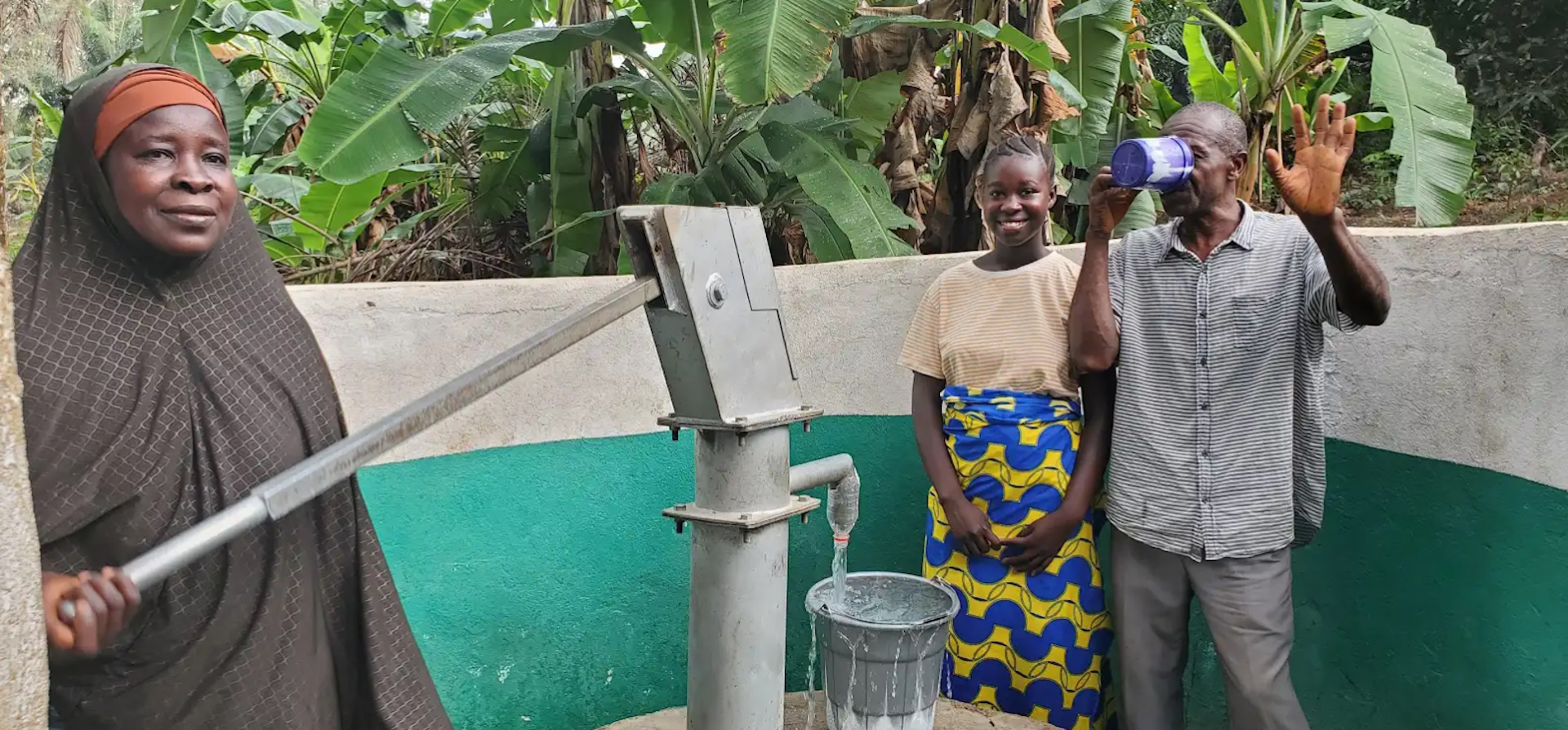
Aminata’s father having a drink from the borehole constructed by her daughter’s sponsor through ChildFund.
ChildFund and its partner, Daindemben Federation, constructed a well right in Aminata’s backyard. “My years of trekking and carrying heavy containers on my head have ended. I don’t have to rush it. I go to the water well at will, anytime, any moment. I am always sure of water, I feel relieved from the stress and fear of fetching water and being abused,’’ she rejoices.
Safe and clean water is now within reach for Aminata and her siblings, Isatu and Amadu, all of whom now fetch water from their new, reliable water source. Over 1,500 people are now accessing safe and clean water from the water well. Mostly, women are the ones frequenting the well, getting water for cooking, laundering and bathing their kids among other activities. Now, these women, some of whom were pregnant, don’t have to climb a hill far away from their community to fetch water. Aminata’s dad, Daimba, a farmer, is also elated.
 Aminata and her parents
“ChildFund is taking care of my child, Aminata, like their own, and this is giving me so much joy. Her sponsorship is something worth talking about. We are seeing the evidence. Aminata has also received learning materials from ChildFund. This is helping to reduce the burden on us.”




Related Resources
Play based learning helps children see teachers as friends, not figures to fear
For 12-year-old Mabinty, starting Class 5 at a new school in a larger town was...
Six months on: ChildFund and KOICA review gains of girls’ education project in Sierra Leone
Six months after the completion of a transformative education initiative, ChildFund and the Korea International...

How sponsorship transformed the life of Sirah and her family
Eighteen-year-old Sirah grew up in Bombali District in northern Sierra Leone, where life revolved around...