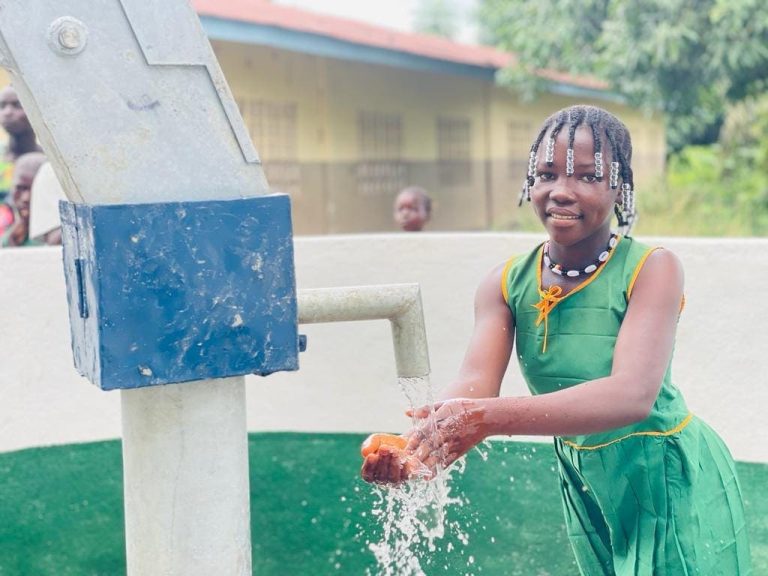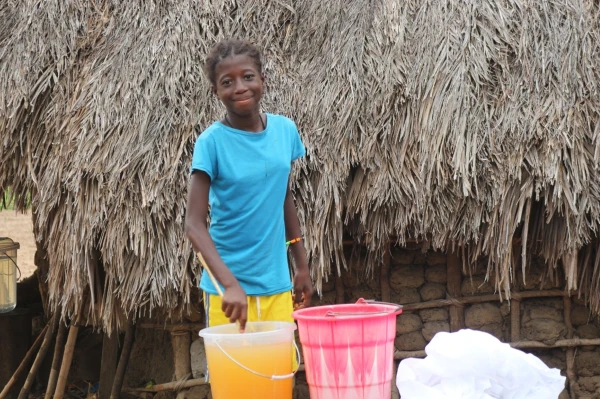
While her mates would walk into the kitchen, turn the tap on and get a glass of safe and clean...
Contaminated water poses serious health risks, especially for children, leading to illnesses such as cholera, typhoid, and diarrhea, and contributing to stunted growth and weakened immune systems. In Sierra Leone, just 57% of the population has access to clean water. The situation is even more dire in rural communities, where only 40% have reliable access. Sanitation coverage is critically low, reaching only 13%, and many communities continue to struggle with unsafe water sources and open defecation, further increasing the risk of contamination.
To address these challenges, ChildFund implements comprehensive interventions at both the community and household levels to improve access to safe water and sanitation facilities, while educating children and families on healthy hygiene practices to reduce the incidence of waterborne diseases.
Through school-based WASH initiatives, we enhance children’s learning outcomes and retention by ensuring clean, safe, and healthy learning environments. At the same time, we strengthen community health by supporting local water and sanitation committees to manage water sources, and by building the capacity of local authorities and service providers.
In addition, ChildFund builds and rehabilitates water points, drills and equips boreholes to reach underserved communities. These sustainable water systems are transforming lives by reducing the time children spend collecting water. With safe water close to home, children have more time to attend school, play with friends, and grow up healthy and safe.
Facts and figures from 2024 data.
Our approach is centered on the health, safety, and dignity of children, especially girls, ensuring they grow up and learn in environments where their basic needs are met and their rights upheld.
Through the Children’s Safe Drinking Water Project, supported by Procter & Gamble, over 2 million people in seven districts now access clean, safe water where they live. Using practical, low-cost solutions like water purification sachets and bio-sand filtration, the project ensures immediate and reliable access to drinking water—improving health, restoring dignity, and protecting children from waterborne diseases.
We construct and rehabilitate water points, drill and equip boreholes and shallow wells, and lay pipeline extensions to reach underserved communities.. These systems reduce the time children, especially girls, spend fetching water, giving them more time to learn, play, and thrive.
We construct child-friendly latrines in schools and communities that are easy to use, clean, and maintain. Gender-segregated toilets provide privacy and safety for both girls and boys, helping to improve school attendance, especially among adolescent girls.
To promote hygiene and reduce the spread of disease, we install handwashing stations close to latrines, encouraging regular hand washing after toilet use. All facilities are designed to be inclusive, with features such as ramps, handrails, and wide entrances to ensure accessibility for children with disabilities and to reduce stigma and exclusion.
Recognizing that safety concerns can discourage the use of sanitation facilities, particularly for girls, we install lighting along paths to and from latrines. This helps create a safer environment, especially at night, and contributes to children’s sense of security and well-being.
We promote hygiene education in schools and communities, educating children and families on how to prevent illness. We provide soap or suitable alternatives, install handwashing stations, and encourage routine hygiene practices. Our work also includes promoting integrated and gender-sensitive WASH in schools, recognizing the vital link between WASH services and education outcomes.
Sustainable change begins with community ownership. We work hand in hand with local communities, forming and supporting water and sanitation committees to oversee and maintain WASH infrastructure. These committees play a critical role in ensuring that services are well-managed, responsive to community needs, and continue functioning long after project completion.
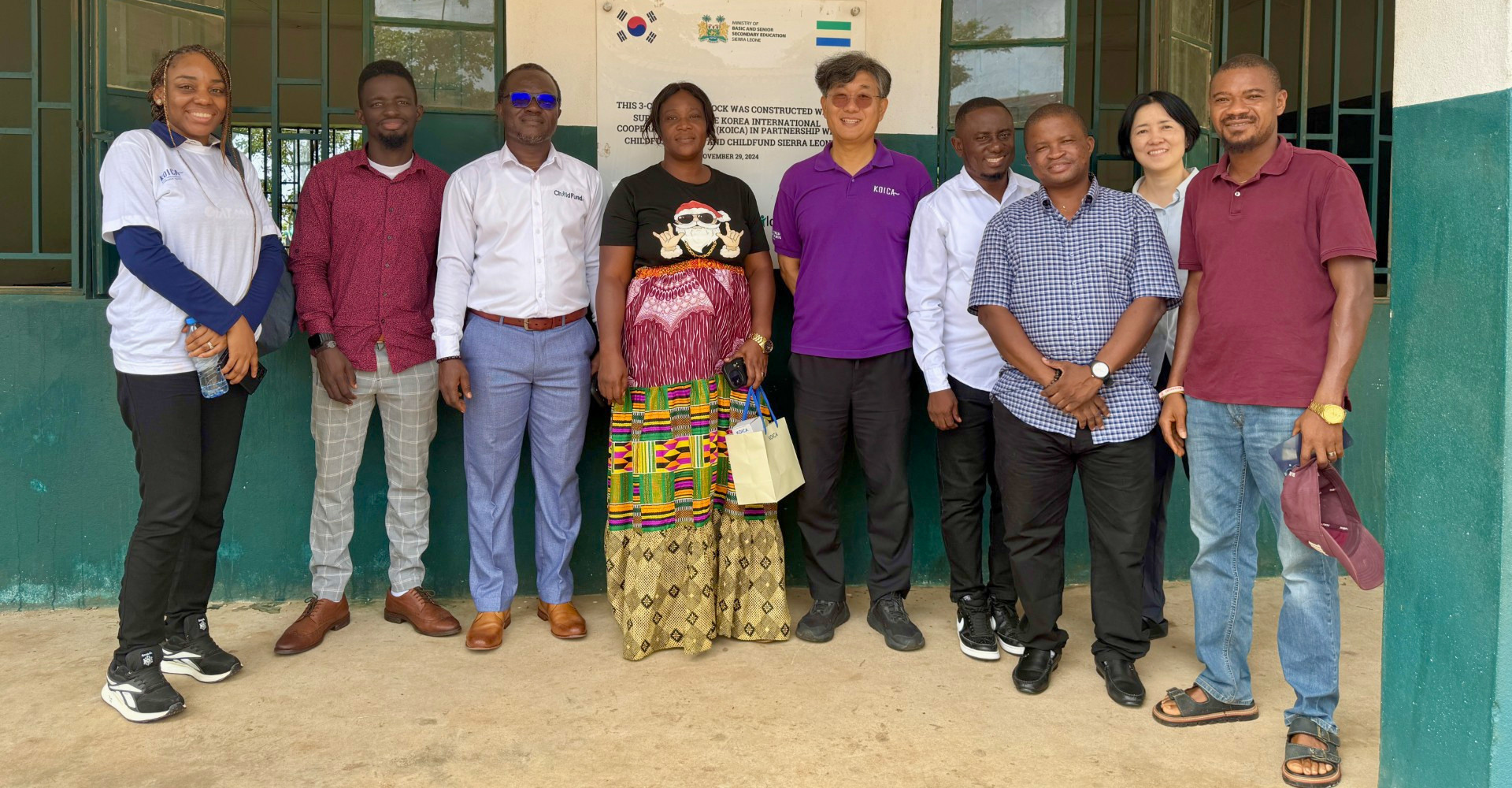
To drive lasting impact, we strengthen WASH systems and promote environmental resilience. ChildFund collaborates with government agencies to ensure technical oversight in the design, construction, quality control, and maintenance of water systems. We also work with partners to support WASH good governance, social accountability, and systems strengthening, ensuring that policies and practices align with the needs of children and communities.

While her mates would walk into the kitchen, turn the tap on and get a glass of safe and clean...
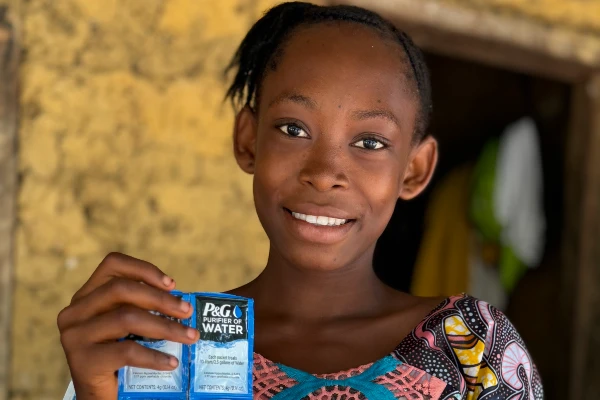
Since 2017, 13-year-old Musu’s community in Kailahun District, has struggled with waterborne illnesses like diarrhea and cholera due to contaminated...

While the effects of COVID-19 were still being felt, baby Christiana was born in Bombali district.