

Meet the farmers uniting against child labor in Koinadugu
June 30, 2026
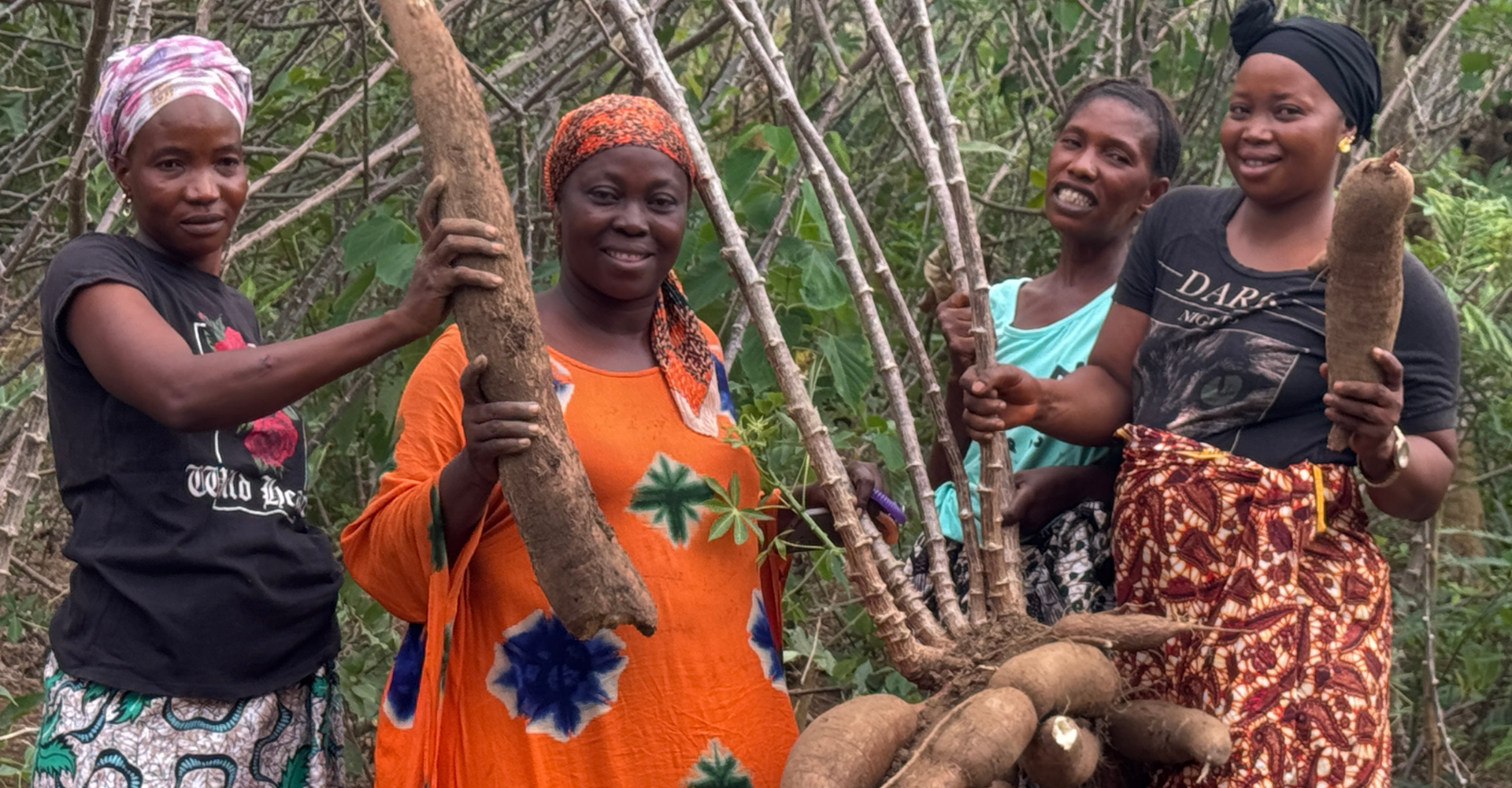
Four farmers - Saran, Rugiatu, Kumba, and Adama, pose in their cassava farm.
Rugiatu, Saran, Kumba, and Adama are cassava farmers and mothers living in Koinadugu District. Like many families in their communities, they used to bring their children to the farms, believing it was normal and unavoidable. Children helped with planting, harvesting, and transporting produce, often missing school in the process.
“We used to think that child labor was the norm,” Rugiatu recalls. “My two children would always accompany me to the farm.” In those days, harvested produce was sometimes thrown from the farm to the village by children, a practice seen as efficient, not harmful.
That perception began to change when the women participated in trainings organized by Daindemben Federation, a local partner of ChildFund, under the Cassava Value Chain Strengthening for Improved Food Security and Sustained Income Project.
The training sessions combined good agricultural practices with education on child labor and children’s rights across Bombali, Falaba, and Koinadugu Districts.
“Through the trainings, we learned that involving children in hard farm work affects their health, safety, and education,” Rugiatu explains. “Now, my children are in school.”

“Through the trainings, we learned that involving children in hard farm work affects their health, safety, and education,” Rugiatu explains. “Now, my children are in school.”
Today, instead of relying on their children’s labor, Rugiatu uses income from cassava sales to meet her children’s needs, paying for school materials and uniforms. Her story mirrors those of Saran, Kumba, and Adama, who have all withdrawn their children from farm labor and committed to keeping them in school.
The project’s baseline report points out that school enrollment and attendance increased by 7.5% across Bombali, Falaba, and Koinadugu districts, with over 2,150 children newly enrolled—250 in Bombali (180 boys, 70 girls), 1,200 in Falaba (800 boys, 400 girls), and 700 in Koinadugu (450 boys, 250 girls).
Violence against children has also decreased in the three districts where the project is being implemented since 2024.
The data shows that 18.75% of children (900 out of 4,800) are now experiencing reduced levels of violence in their homes and communities.
The women’s impact did not stop at their own households. Together, they began engaging fellow farmers and community leaders to confront child labor more broadly. Their advocacy contributed to the enactment of local bylaws in collaboration with the town chief.
“We now have laws that not only protect farms and farmers, but also protect children from being used on farms,” says the Village Chief, Pa Hassan. “We even have bylaws that require every family to send their children to school. The Chief added that they have separate fines for child labor and for non-compliance with school enrollment. “Farmers who use their children on the farms and those who refuse to send their children to school now pay a fine of Le 100 (about USD 5) and Le 150 (about USD 7),” Chief Hassan says.
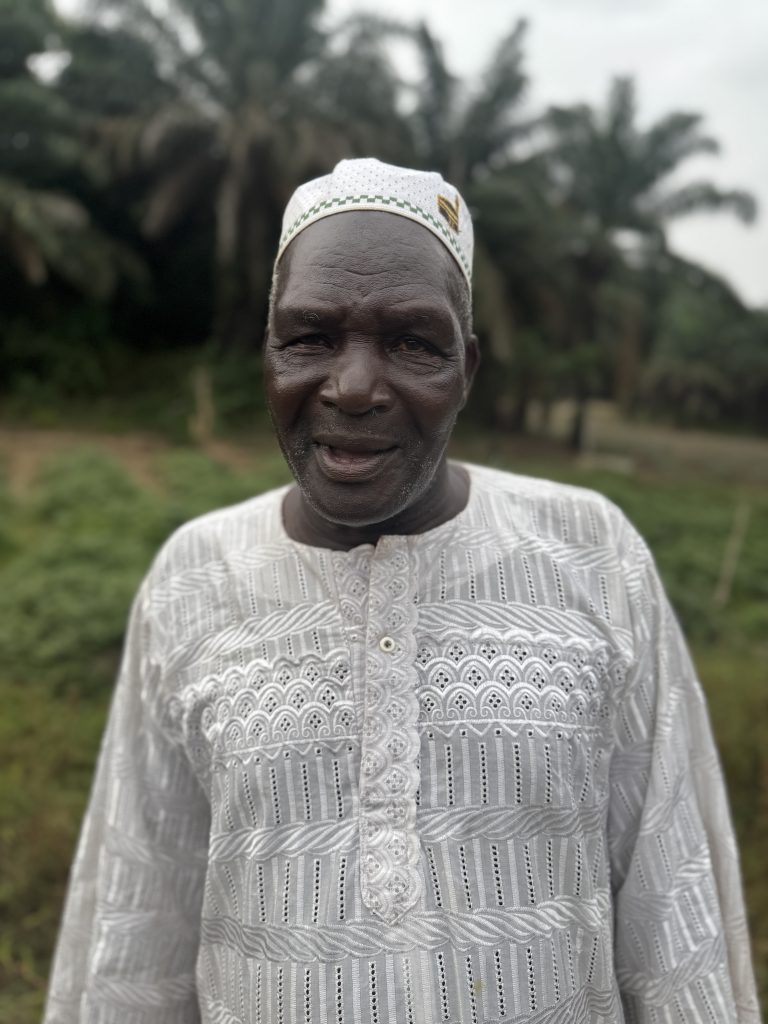
“Farmers who use their children on the farms and those who refuse to send their children to school now pay a fine of Le 100 (USD 5) and Le 150 (USD 7),” Chief Hassan says.
As awareness grew, farmers involved in the project began sharing knowledge with others beyond the project, creating a ripple effect across neighboring communities. Conversations about child labor, once avoided or dismissed, are now openly discussed in farming groups and community meetings.
At the same time, the project is addressing one of the root causes of child labor: low income. Cassava farmers often struggled with post-harvest losses and were forced to sell fresh roots quickly at very low prices, sometimes even selling waste for a meagre sum just to recover labor costs.
To change this, the project is constructing barnyards in 10 communities across Falaba and Koinadugu districts. These facilities will support cassava storage and processing, using machines to convert cassava roots into flakes, leaves into powder, and peels into animal feed.

“With this facility, everything about the cassava will be useful,” Rugiatu says. “Before, much of what we harvested would turn into waste when we couldn’t transport it to the market.”
Now in its third year, the project is delivering visible results. Improved farming techniques, combined with value addition and higher incomes, are reducing families’ dependence on child labor. For women like Rugiatu, Saran, Kumba, and Adama, the change is both economic and deeply personal.
“With this facility, everything about the cassava will be useful,” Rugiatu says. “Before, much of what we harvested would turn into waste when we couldn’t transport it to the market.”




Related Resources
Play based learning helps children see teachers as friends, not figures to fear
For 12-year-old Mabinty, starting Class 5 at a new school in a larger town was...
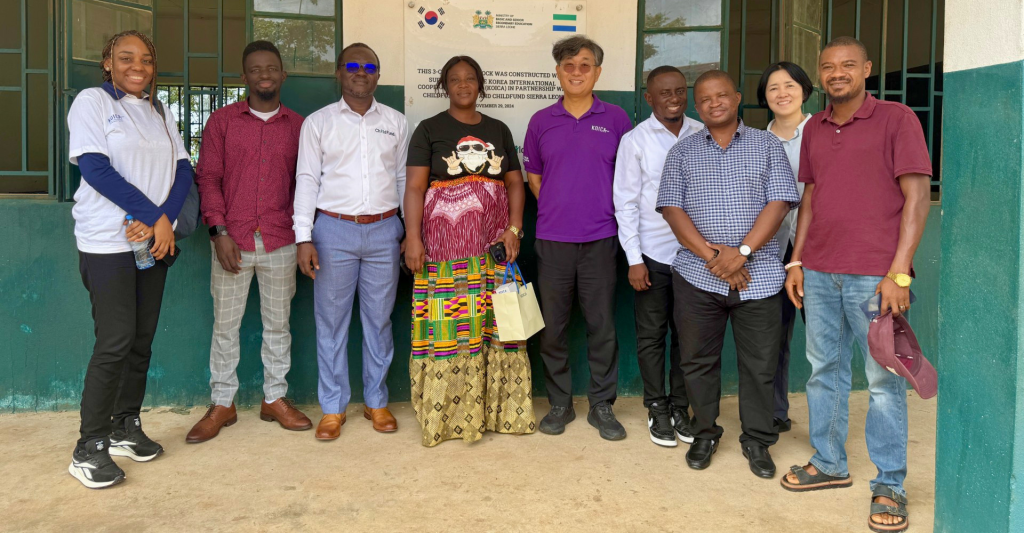
Six months on: ChildFund and KOICA review gains of girls’ education project in Sierra Leone
Six months after the completion of a transformative education initiative, ChildFund and the Korea International...

When the pot keeps boiling: Women’s savings groups are transforming cocoa communities in Kono, Kenema & Kailahun
In the cocoa-growing areas of Kono, Kenema, and Kailahun district, many farming families, especially women...