

Solar power delivers uninterrupted learning to Koinadugu students
June 5, 2025
Fifteen-year-old Mariama dreams of becoming a medical doctor. But in the remote district of Koinadugu, something as basic as electricity once stood in her way.
“Studying at night after school was very hard for me because there was no light at home or anywhere else in my community,” she says. “Most of us (students) did our homework in school, because once we got home, there was nothing we could do.”
The LIFE Solar Electrification Project
That has begun to change, thanks to the Light for Education (LIFE) Solar Electrification project, an initiative under ChildFund’s Integrated Community Action for Protection and Education (CAPE) project, funded by ChildFund Korea. LIFE has brought a $45,000 investment in solar electric systems to three schools in Koinadugu District, directly addressing energy challenges in classrooms and learning spaces.
“LIFE will contribute to improved teaching and learning outcomes and pave the way for the introduction and use of technological innovations and gadgets that aid teaching and learning in the selected schools,’’ explains Isatu Venn, ChildFund Sierra Leone’s Programs and Sponsorship Director.
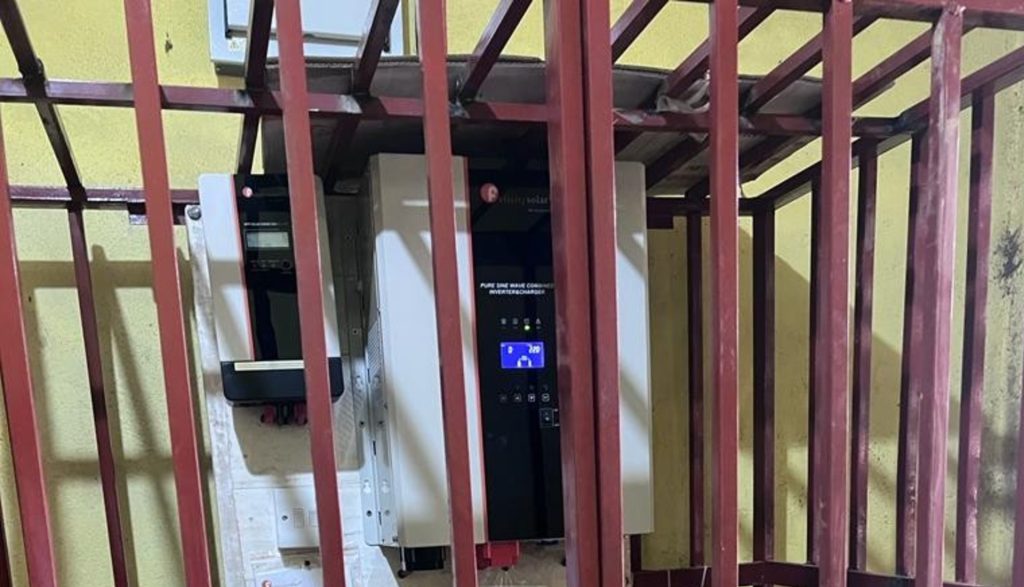
Now, 939 students and 24 teachers benefit from uninterrupted solar power, with each school receiving a 5,000-watt system — the equivalent of a 5KVA generator.
For Mariama, the transformation is already evident. “Koinadugu District is thickly forested and blessed with hills. Sometimes, when it rained, the environment became cloudy, and our classroom was very dark. We could hardly see the chalkboard,” she says. “With solar power, now we can see the board clearly, even when it rains. We use this facility to study during examinations. This facility is already helping us in our school and community. We now have somewhere to study with a 24-hour light. Before now, when it rained, the place got dark, and we could hardly see what was on the board. Now, when that happens, we simply just turn on the light, and we are okay to continue our lessons.”
Her friend, Nyuma, age 10, shares the excitement: “We didn’t have time to study at night. Now, we do. That dark classroom we used to have when it rained, is all gone now.”
Technology, Learning and Teaching Support
The impact goes beyond lighting. With access to consistent electricity, teachers can now run extra lessons, a critical intervention for students preparing for public examinations. Many school syllabi had remained unfinished due to school closures during the COVID-19 pandemic, but now, catch-up classes are possible.
And there’s more: “In most communities nowadays, teachers have smartphones. With this solar power installed, teachers can now charge their phones via the solar facilities provided. They can use their phones to do research on some topics if there is internet connectivity,” says Emmanuel V. Deoud, Development Partners’ Desk Officer at the Ministry of Basic and Senior Secondary Education (MBSSE), during a monitoring visit.
“Electricity is one enabling factor for improving learning outcomes and letting students have a mastery of their schoolwork,” he adds.
The benefits of the CAPE project don’t stop at lighting. Mariama’s school also now has gender-separated toilets and handwashing stations, thanks to ChildFund. “ChildFund is doing well for us in this school,” says Mariama. “First, it was hand washing and toilet facilities. Now, it is this light that they have brought us. We are so grateful that these facilities are helping us to learn.” From darkness to light, the future now looks much brighter for Mariama, and hundreds of other students just like her.




Related Resources
Play based learning helps children see teachers as friends, not figures to fear
For 12-year-old Mabinty, starting Class 5 at a new school in a larger town was...
Six months on: ChildFund and KOICA review gains of girls’ education project in Sierra Leone
Six months after the completion of a transformative education initiative, ChildFund and the Korea International...

How sponsorship transformed the life of Sirah and her family
Eighteen-year-old Sirah grew up in Bombali District in northern Sierra Leone, where life revolved around...