Increasing Access to Secondary Education for Out-of-School Girls
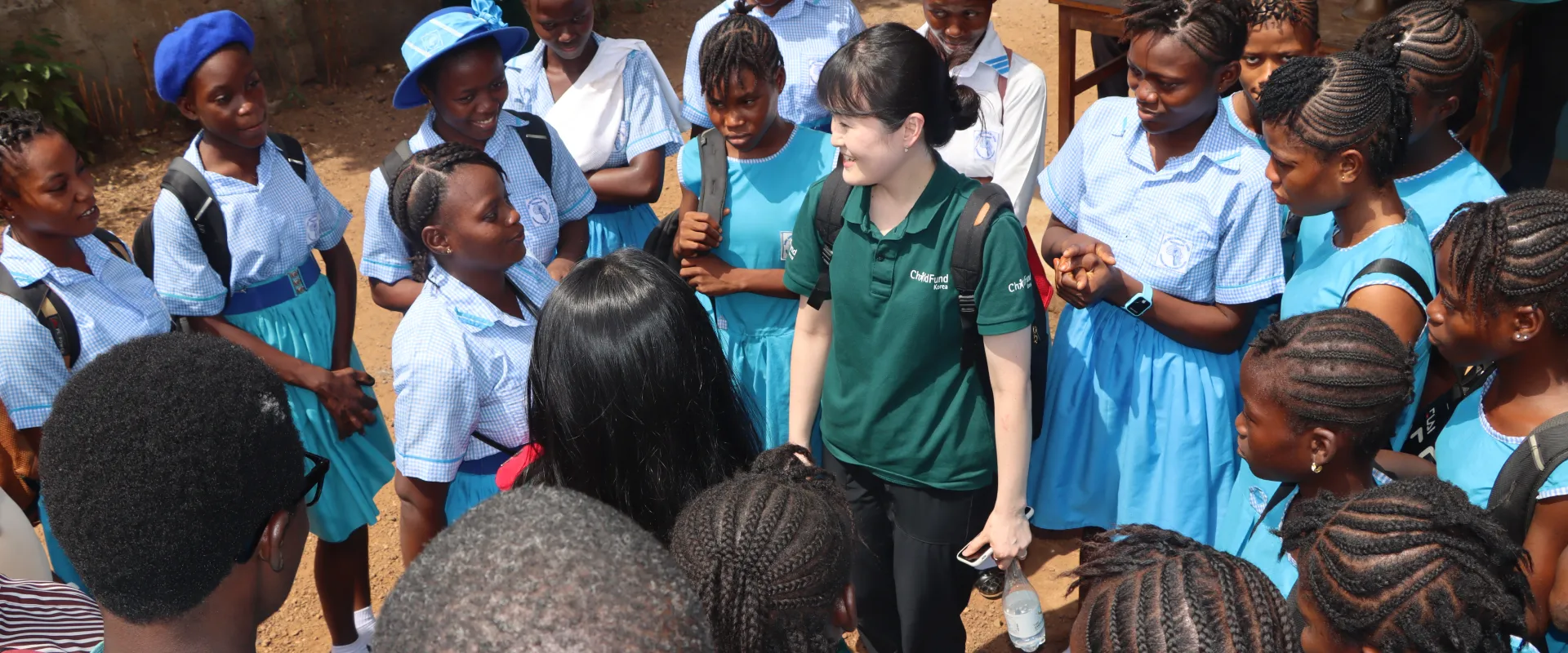
In April 2023, Sierra Leone’s parliament passed the Basic and Senior Secondary Education Act, 2023, which integrates key aspects of the landmark 2021 National Policy on Radical Inclusion in Schools. This policy acknowledges the systematic exclusion of pregnant girls, young mothers, and other marginalized groups from education. Until 2020, the government had banned pregnant girls from attending school. Sierra Leone, which has one of the highest rates of teenage pregnancies globally, sees the highest incidence among girls from impoverished backgrounds.
Informed by the need to ensure inclusive and equitable quality education and promote lifelong learning opportunities for all, as outlined in the Government of Sierra Leone’s National Policy on Radical Inclusion in Schools and Sustainable Development Goal (SDG) 4, this project works towards bridging the gender gap in education.
To ensure inclusive and equitable quality education and promote lifelong learning opportunities for all.
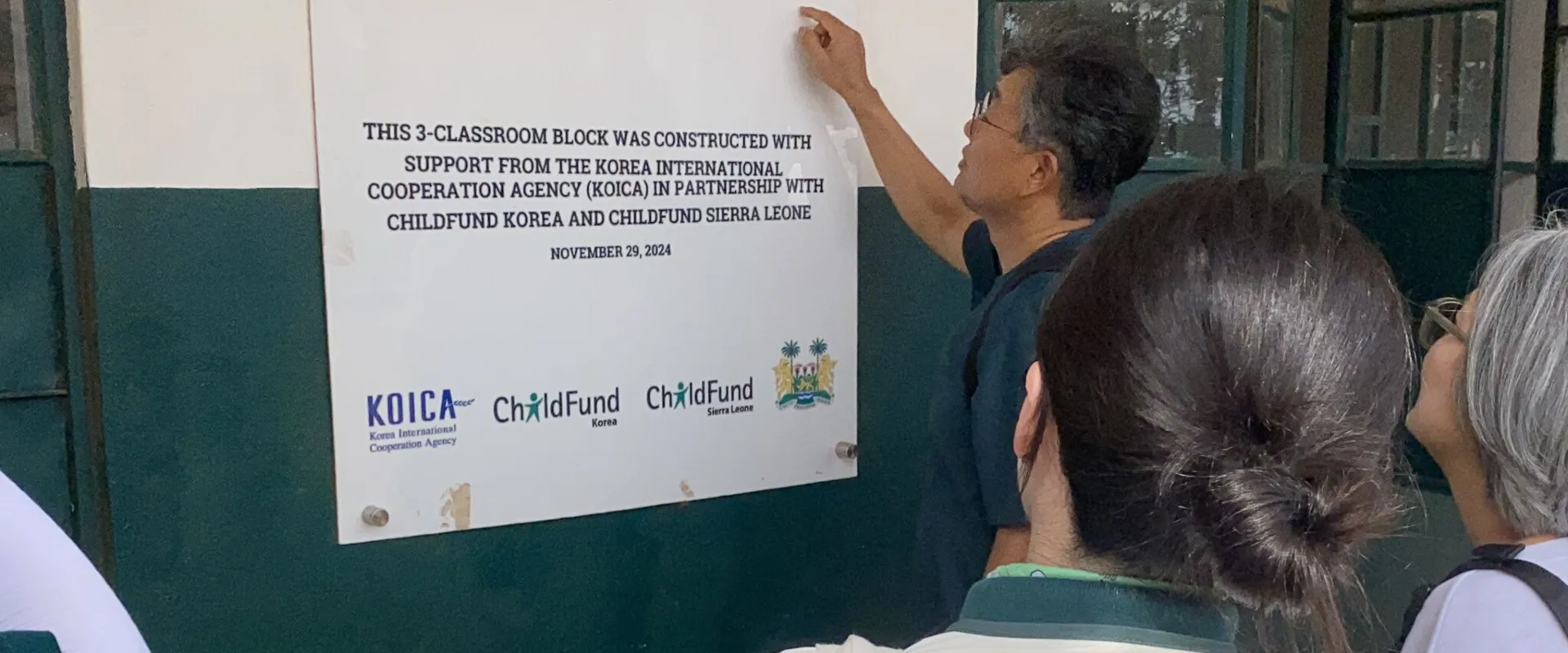
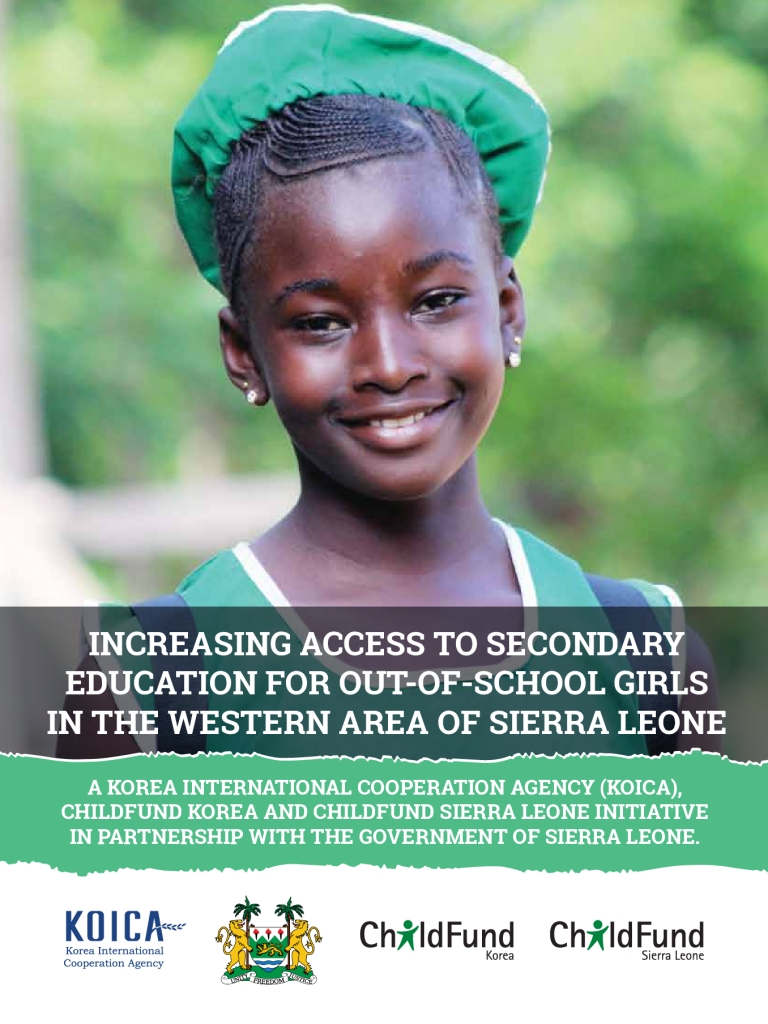
This 3-year project (April 2023 – December 2025) is the first to be funded by Korea International Cooperation Agency (KOICA), through ChildFund Korea, and implemented by ChildFund Sierra Leone in collaboration with the Ministry of Basic and Senior Secondary Education (MBSSE), Ministry of Gender and Children’s Affairs, in 6 schools in the Western Urban and Rural Districts.
ChildFund Korea contributed KWR 411,800,000 funding to the project and acts as the main link and channel of communication between ChildFund Sierra Leone and KOICA
Role:
- ChildFund is the lead implementing partner for the project across all 6 schools in the Western Area Urban and Rural districts.
- Collaborated with the Ministry of Basic and Senior Secondary Education (MBSSE) to jointly develop participant selection criteria for the project.
- Contributed KRW 205,900,000 in match funding, demonstrating strong local commitment to the success and sustainability of the initiative.

Role: The Ministry of Basic and Senior Secondary Education (MBSSE) provided the technical designs used for classroom construction and offered expert guidance for teacher capacity building, working through the Teaching Service Commission. The Ministry also collaborated with ChildFund to jointly develop the selection criteria for participants in the project, ensuring alignment with national education priorities.
The Ministry of Gender and Children’s Affairs provided technical guidance to support the capacity building of project participants, ensuring that gender and child protection considerations were effectively integrated into the implementation process.
- Western Area Urban District
- Western Area Rural District
- 5,646 girls are now using gender-friendly toilets, giving them the confidence to attend school regularly, especially during their menstrual periods. Additionally, the privacy, safe and conducive toilet facilities enhance retention in schools
- 10,865 students now have access to clean, reliable water
- 347 adolescent girls provided with school learning materials remain in school and are showing improved academic performance, leading to better retention and smoother integration of out-of-school girls into the school system.
- 25 girls Out-of-School (OOS) Girls that sat the Basic Education Certificate Examinations (BECE) in the 2024 school academic year, 23 passed with flying colors across the 6 schools continuing their senior secondary education., while 4 got requirements to continue their tertiary education. This means, over 90% of OOSC girls passed their secondary exams.
- In addition, the adolescent mothers are applying skills they have learned to prepare nutritious meals for their babies using locally available foods, reducing reliance on costly imported baby food. As a result, the children are already demonstrating basic literacy and numeracy skills, laying a strong foundation for their educational journey
- At the childcare center, 28 children are engaged in early learning activities, helping them transition smoothly into nursery school;
- 139 teachers are demonstrating increased knowledge on the Teachers Code of Conduct, Radical Inclusion, Sexual and Reproductive Health Rights, Signing and Closing of Register, Lesson Note Development and the 2023 Education Act across the 6 schools.
- 64 adolescent mothers are receiving childcare support, enabling them to re-enroll in school and remain in education. These young mothers now have a safe space to leave their children while attending classes.
- 18-classroom blocks constructed across the 6 schools have significantly decongested classrooms from 55 per class to 40 per class on average across the 6 schools and thus increased school enrolment respectively.
- 4 ECD centers established across four schools are helping keep out-of-school girls in class, as their children are now safely cared for at the centers.
- Teachers are demonstrating professionalism and adhering to teaching ethics across the schools.
- Teachers deliver age-appropriate sexual and reproductive health messages to all school-going pupils across the six schools.
- Teachers are engaged in effective lesson planning to deliver on their notes.
- Teachers know the proper channels to report and address cases of abuse within the schools
- 72 on-campus campaigns equipped Child Rights Club (CRC) members to raise awareness on child protection, violence against children, child rights, and reproductive health across the six schools.
- Students are now more aware of protection, abuse, and its effects on children.
- 6 community ordinances have been enacted by local council officials and community stakeholders to strengthen child protection at the community level. Ongoing awarenes sraising initiatives have also created public spaces where these ordinances are openly discussed, promoting greater community engagement in safeguarding children both at home and in schools.
- Mother Support Groups (MSGs) have successfully ensured 100% re-enrolment and over 90% retention of out-of-school (OOSC) girls across six communities. Through sensitization campaigns led by MSG members, there has been a significant reduction in stigma and discrimination against these girls. In addition, MSGs provide mentorship and counseling services that have helped prevent adolescent pregnancies and child or early marriages among many OOSC girls since their return to school.
- School authorities reported a decline in violence-related incidents among students across the schools.
- CRC members are mentoring girls on their sexual and reproductive health and monitoring the welfare of their peers both at school and at home to ensure protection.
- Teachers have strengthened their recordkeeping, ensuring better documentation of attendance and more effective tracking of absenteeism.
- Teachers have strengthened their recordkeeping, ensuring better documentation of attendance and more effective tracking of absenteeism.
- Teachers treat all pupils equally in accessing education across the six schools.
- School authorities reported a reduction in absenteeism among girls during their menstrual periods in the 6 schools.
Latest News

Kadiatu returns to school after 2 years at home
Two years ago, Kadiatu’s future seemed bleak. At just 14, she had...
Read More
Male tribal chiefs champion girls’ education in Western Area
In 2024, the deaths of three girls while undergoing Female Genital Mutulation/Cutting...
Read More
KOICA and ChildFund launch USD 1.5 Million project to help out-of-school girls access secondary education in Sierra Leone’s Western Area
Acknowledging educational challenges, such as the learning crisis, gender discrimination and the...
Read MoreRelated Resources

Contact Us
For more information, please write to:
Victor Kamara
Country Director
Email: VKamara@childfund.org
SHARE VIA: