

Male tribal chiefs champion girls’ education in Western Area
June 5, 2025
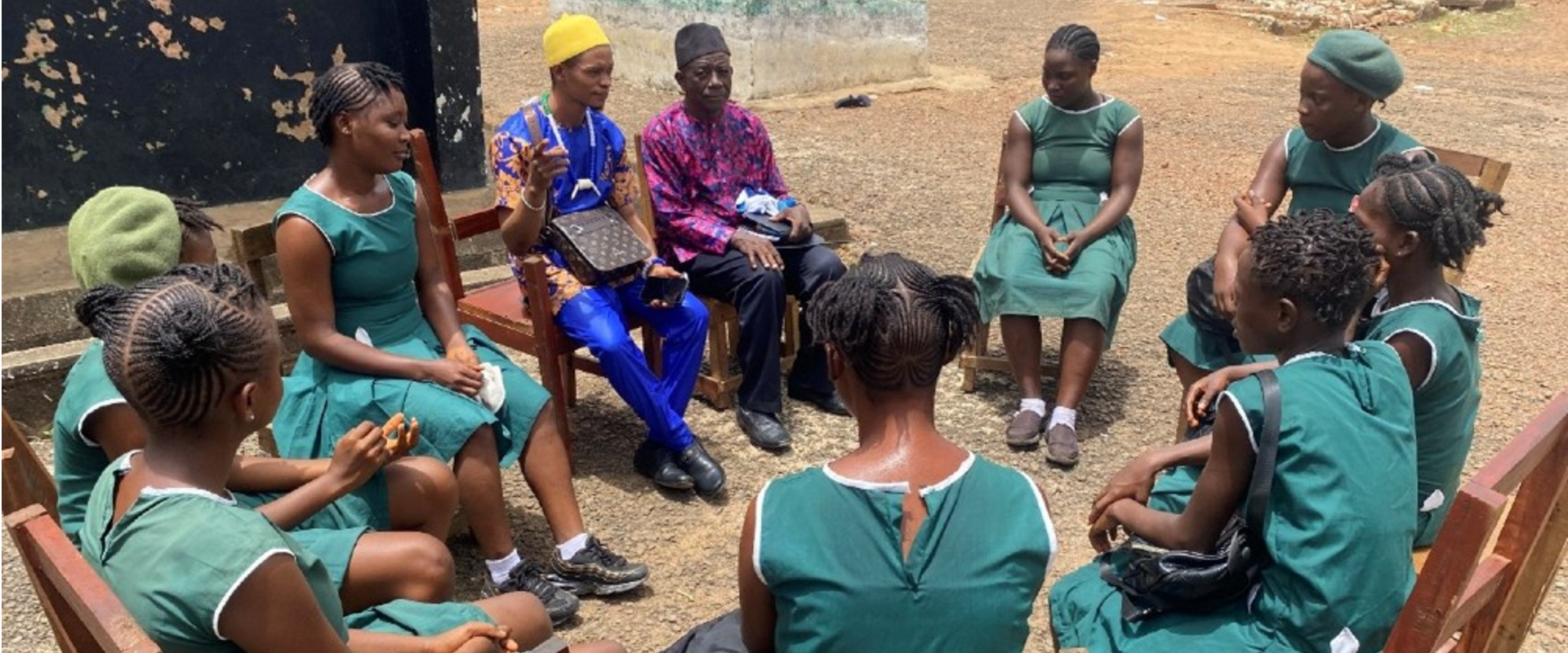
A session between tribal chiefs Pa Alimamy Sesay II and Mohamed Bangura with girls on education matters.
In 2024, the deaths of three girls while undergoing Female Genital Mutulation/Cutting (FGM/C) in Kambia District highlighted the continued dangers faced by young girls. In response, the government approved the National Policy on Radical Inclusion in Schools in 2021, aimed at ensuring education for marginalized groups.
Tribal chiefs like Pa Alimamy Sesay II and Mohamed Bangura are leading efforts to end harmful practices. As members of the Male Action Group (MAG), part of ChildFund and Korea International Cooperation Agency’s (KOICA), ‘Increasing Access to Secondary Education for Out-of-School Girls’ project, they have helped re-enroll more than 25 girls in school in their community.
Their leadership has been crucial in convincing parents to prioritize their daughters’ education and enforce penalties for non-compliance. “We faced so many challenges during the first year of the project like reluctance from some parents in re-enrolling their girls to school. Using our authority as tribal heads, we were able to convince them,” says Chief Pa Alimamy. ‘’Some of the parents and guardians frowned at re-enrolling the adolescent mothers but accepted after we invited them to several meetings.’’
Millicent, now 16, is happy to be back in school after the project provided her secondary school with teaching and learning materials and care for her baby while she is in school. “I am so grateful that Chief (Pa Alimamy) was able to identify me for this project because I really needed it. “I was quite unhappy when I left school because I felt that my dream of becoming a nurse would not be achieved if I were a dropout,” says Millicent.
Tribal chiefs like Pa Alimamy Sesay II and Mohamed Bangura are leading efforts to end harmful practices.
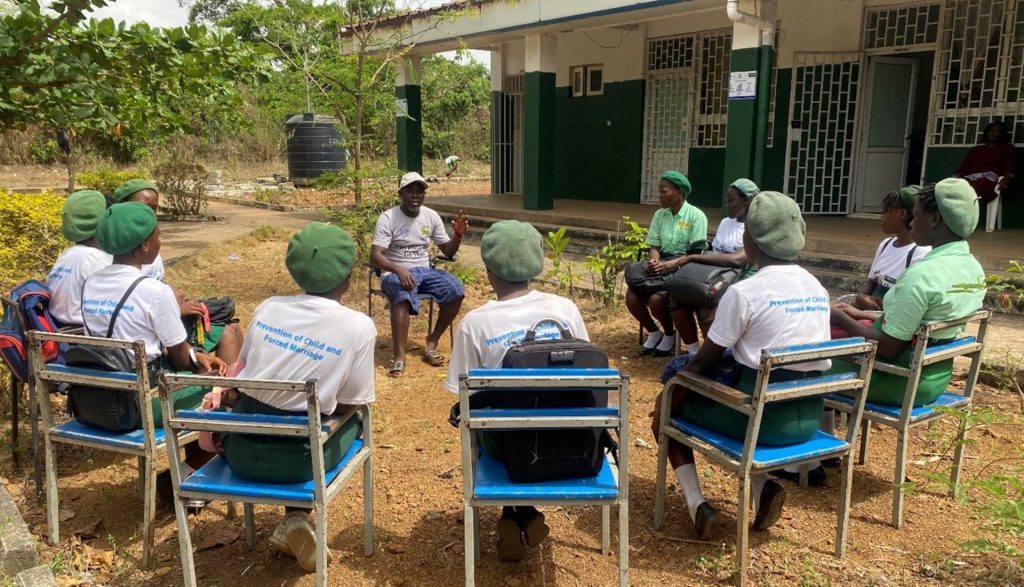
Chiefs Enforce Education Through By-Laws
“What we did at our community is to establish by-laws that will force parents or guardians to send their children to schools,” says Chief Mohamed Bangura. “We place a fine of Le 500 ($ 22) on any parent that refuses to send their child to school,” he adds.
To date, this initiative has re-enrolled 240 girls across six schools in Western Sierra Leone, and continues to enroll more. Chiefs like Pa Alimamy and Mohamed are breaking patriarchal barriers and advocating for a future where girls can pursue their education and dreams, offering a model for other communities to follow.
With access to power, teachers are also benefiting. “Most of us now have smartphones,” said Mr. Conteh, a teacher from Koinadugu 2. “With this solar installation, we can charge our phones at school. If we have internet connectivity, we can use them to research lessons and improve our teaching.
SHARE:




Related Resources
Play based learning helps children see teachers as friends, not figures to fear
For 12-year-old Mabinty, starting Class 5 at a new school in a larger town was...
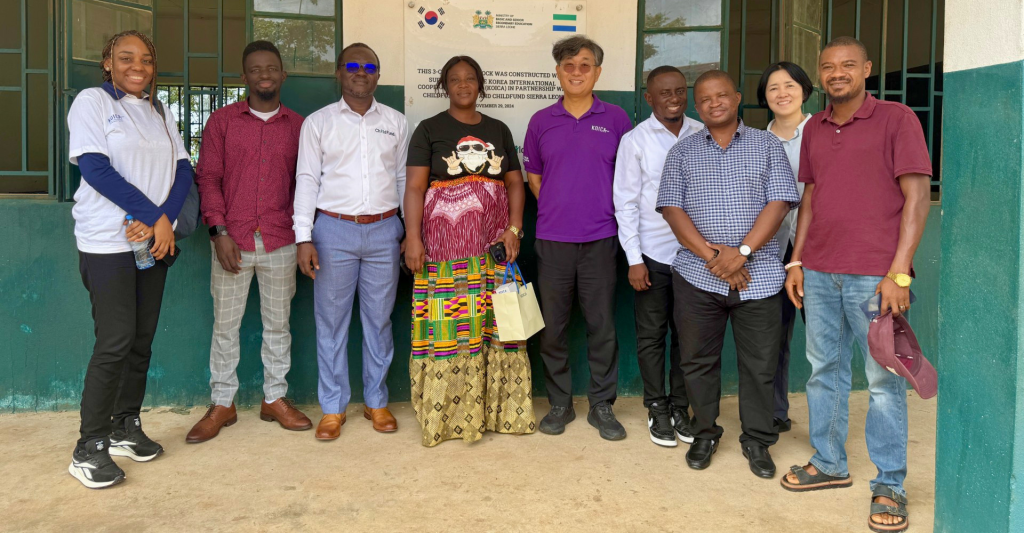
Six months on: ChildFund and KOICA review gains of girls’ education project in Sierra Leone
Six months after the completion of a transformative education initiative, ChildFund and the Korea International...

Meet the farmers uniting against child labor in Koinadugu
Rugiatu, Saran, Kumba, and Adama are cassava farmers and mothers living in Koinadugu District. Like...