

Meet Baby Ansumana, the newest addition to a thriving household economy
June 13, 2025
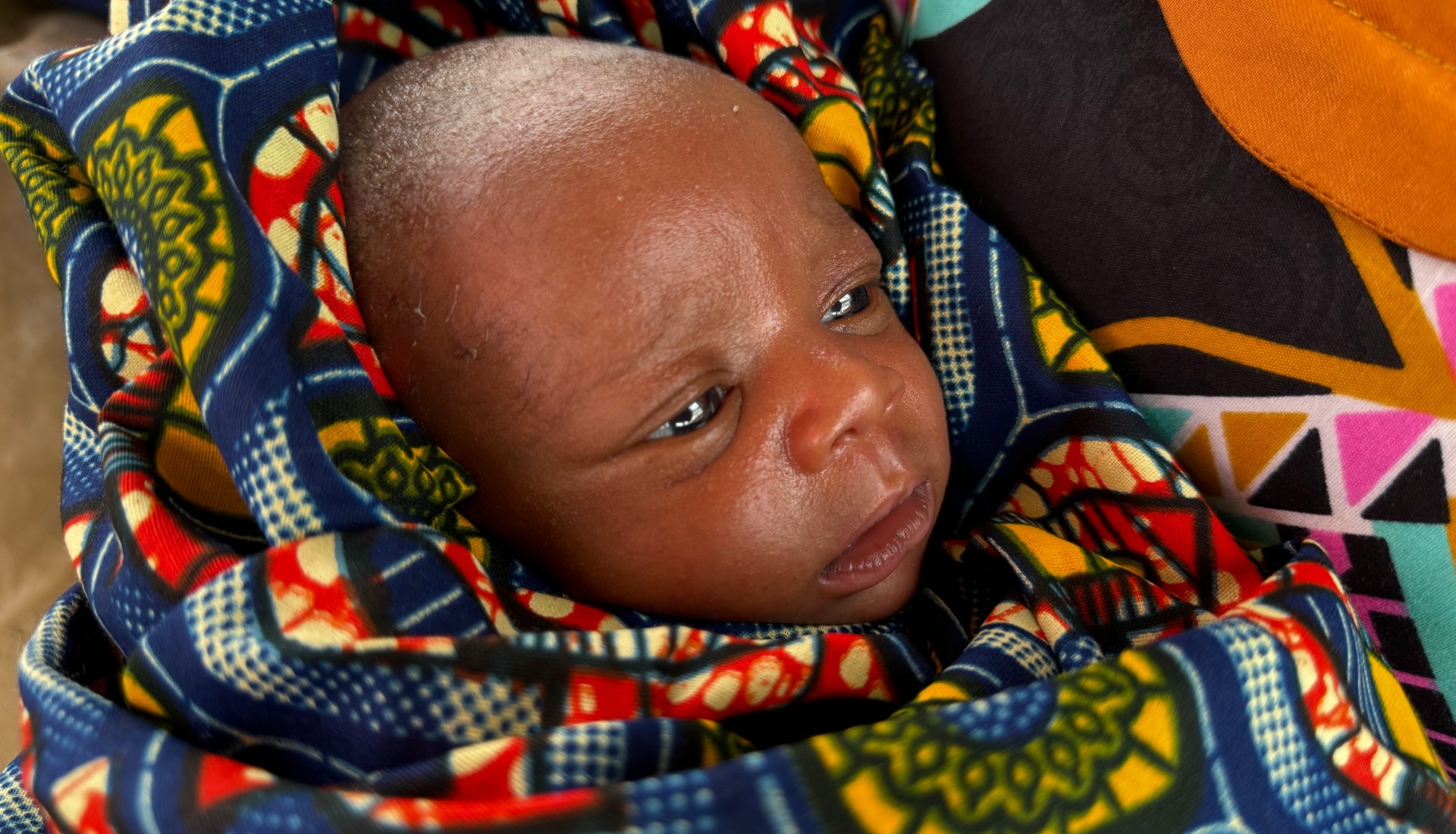
Six-month-old Baby Ansumana.
The world’s economy is in dire straits. Prices of basic commodities have soared to unimaginable levels, and the leone is continuously depreciating against the U.S. dollar. The country is ranked among the poorest nations in the world, with many people surviving on less than two dollars a day. While everyone feels the economic strain, those hit hardest are low-income earners and people living in extreme poverty in rural areas.
One such individual is Aminata, a mother of four living in Kailahun District. Her husband, a primary school teacher, barely earns enough to support the family. She tried farming, but it wasn’t sufficient given their heavy financial burdens.
The last thing on her mind was raising another child in such a struggling economy. “I resolved not to have another child because I didn’t want them to suffer,” she said. “I wasn’t expecting to get pregnant again, but now that my baby is here, he means the world to me.” The impact of COVID-19, coupled with the Russia and Ukraine war exacerbated the economic challenges, especially for vulnerable groups. People are still reeling from the shock of the pandemic.
“Doing something to help people cope with this shock was not an option; it was a necessity to strengthen women’s capacity to deal with complex issues affecting children’s well-being,” said Amara Samai, Program Manager at Ndomakeh Federation. With funding from ChildFund, cash of 1,500 leones (USD 71) was distributed to several women to help them start businesses.
In 2023, she was among many women who received cash transfers from ChildFund, through its local partner, Ndomakeh Federation, to start a business. “I received support from Ndomakeh. That was the start of my journey,” she said. “I was determined from that point on that my family’s only way out of our struggling situation was to make the most out of what I received. Aminata invested her money in petty trade, selling rice, fish, cooking oil and other much needed commodities in her community. I started selling food items because people buy food more than any other commodity in my community. I was saving some money hoping that one day I would be in a position to own multiple profitable businesses. Once I had saved some money, I embarked on selling fuel because it is also in high demand from motorcycle riders.” In 2024, Jaward has set herself apart as a parallel entrepreneur.

As if owning two businesses was not enough, she embarked on a third venture. ‘’Poverty likes a lazy person. Once you start being lazy and refusing to expand your business or think of more profitable challenges, poverty creeps in,’’ she says “I ventured into selling recharge phone airtime in addition to my fuel and food trade. All three put together are helping me save a lot and attend to family issues. My baby does not have to worry or struggle for anything. I can afford whatever is needed for her growth and upkeep.”
Baby Ansumana is now 7 months old (as of September 2024) and blessed to be born at a time that her mother’s business has excelled, and their household’s economy is thriving.
To date, Jawards business is worth over USD 1,000. This, compared to where it all started with USD 71, is a show of strength of an industrious woman determined to keep her household income steady and thriving. Household economic strengthening initiatives are crucial in reducing families’ vulnerability to poverty, promoting economic independence, and enhancing their ability to provide for their children in such challenging times.
Aminata is raising Baby Ansumana together with her other two girls, Kadie, 12, who is in Junior Secondary School 1 (JSS1) and Sando, 8, class three (3). “Our mom is now able to buy us school materials. She buys us shoes, bags, and helps provide food for the home,” says Kadie.





Related Resources
Six months on: ChildFund and KOICA review gains of girls’ education project in Sierra Leone
Six months after the completion of a transformative education initiative, ChildFund and the Korea International...

Meet the farmers uniting against child labor in Koinadugu
Rugiatu, Saran, Kumba, and Adama are cassava farmers and mothers living in Koinadugu District. Like...
ChildFund, UK, Denmark, Sierra Leone gov’ts, UNICEF & LEGO commit USD 15.3 M to early childhood care and education
ChildFund, together with the governments of Denmark, the United Kingdom, and Sierra Leone, alongside the...