ChildFund Sierra Leone goes full solar!
June 6, 2025
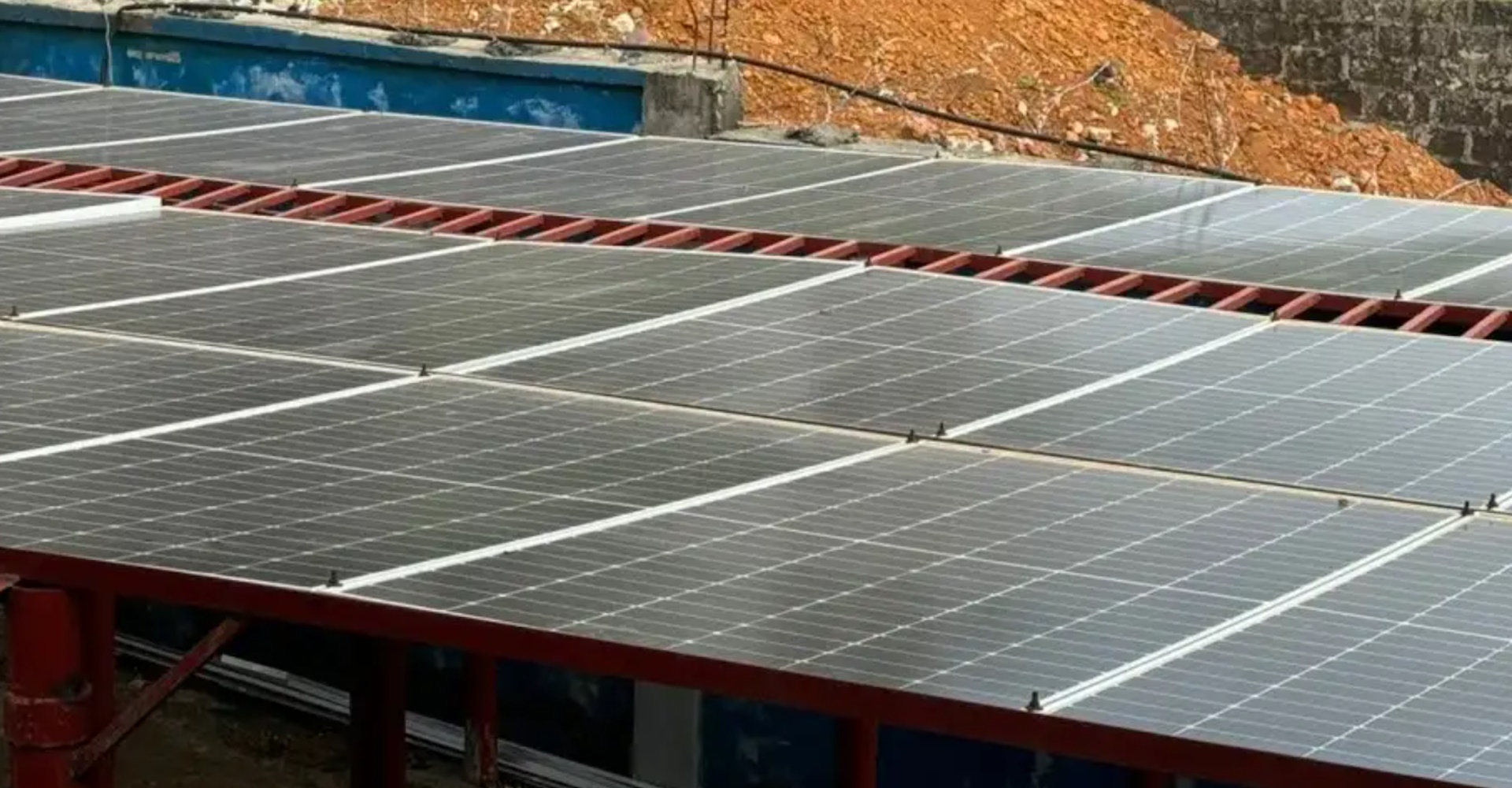
An aerial view of the solar grid installed at the ChildFund Sierra Leone office in Freetown.
Much like air and water, electricity is essential to our daily lives, becoming a fundamental part of our modern existence. As is the norm in most African countries, when there is no electricity, we use diesel-powered generators. Every other establishment, be it an office, place of worship, school or home, has a generator. Reports indicate that there are approximately 33,000 generators currently in use in Sierra Leone, providing a capacity of around 180 MW. Unfortunately, ChildFund Sierra Leone, just like many other entities, happens to own a generator.
The temptation to switch to generators during power outages creates a bittersweet relationship between humans and the environment. While humans benefit from this alternative source of electricity, the environment suffers, and others are also affected.
According to the World Nuclear Association, over 40% of energy-related carbon dioxide (CO2) emissions are due to the burning of fossil fuels, such as diesel. for electricity generation.
As greenhouse gas emissions envelop the earth, they trap the sun’s heat, triggering global warming and climate change. The planet is now heating up at an unprecedented rate in recorded history. Rising temperatures are altering weather patterns and disrupting the natural balance, a situation currently affecting Sierra Leone. Heatwaves are sweeping across the country, raising serious concerns.
At the beginning of this year, we decided that protecting the environment starts with us, as individuals, and by extension, as an organization. Recognizing the frequent power outages and high costs associated with diesel generators, ChildFund decided to transition to a more reliable and eco-friendly energy source. We embarked on an ambitious office solarization project aimed at reducing operational costs and promoting environmental sustainability.
The project began with an extensive energy audit to determine the office’s energy consumption patterns and peak load requirements. This audit provided the baseline data necessary for designing a customized solar power system capable of meeting the office’s energy needs.
After the audit, we began the installation of an initial 42 solar panels on our two-storey block office. We later added another 18. In all, a total of 62 solar panels (550 watts per panel), 6 lithium solar batteries including a solar charge controller unit were installed. The installation process began with the selection of high-efficiency photovoltaic panels and advanced inverters, capable of converting solar energy into usable electricity. To ensure maximum efficiency, the panels were mounted at an optimal angle to capture the most sunlight throughout the day.
The robust battery storage system stores excess energy generated during the day for use during nighttime or cloudy days. This system is crucial for ensuring a continuous power supply, thus eliminating the need for backup diesel generators. The entire installation was carried out by a team of certified solar technicians in collaboration with local contractors, promoting skill transfer and local capacity building.
The total cost for the solarization project was $42,210.15. This included the cost of the solar panels, inverters, battery storage system, mounting structures, wiring, and labor. While the initial investment was substantial, ChildFund anticipates significant long-term savings on energy expenses and a reduction in carbon emissions. The organization expects to recoup the investment within 5 to 7 years through savings on electricity bills and zero generator fuel costs.
The Bright Return on Investment
Installation costs for solar panels can be expensive, but solar power offers long-term financial benefits. Once installed, solar panels incur minimal operating and maintenance costs, providing electricity for decades. Over time, solar power has substantially lowered electricity bills, yielding a solid return on investment, as demonstrated at our ChildFund office in Freetown.
Since transitioning from generators to solar power, our ChildFund headquarters office has realized significant savings. Before solarization, our Freetown office spent USD 4,550 on generator fuel per year. After switching to solar power, this expense dropped to USD 697, resulting in a remarkable saving of USD 3,853.
Previously, we spent USD 5,865 per year on electricity bills paid to the Electricity Distribution Agency (EDSA). This has now reduced to just USD 354 annually, resulting in a significant yearly saving of USD 5,511.
How Solar Power Helps Protect the Environment
- Reduced Emissions: Unlike traditional electricity generation methods such as coal or natural gas, solar power produces minimal greenhouse gas emissions and pollutants. This makes it a cleaner and more environmentally friendly energy source.
- Sustainability: Solar energy is derived from the sun. This a renewable and virtually limitless resource. With proper maintenance, solar equipment can provide long-term energy solutions. Once installed, solar systems mainly require sunlight and rechargeable batteries, ensuring that future generations of ChildFund staff can continue to benefit from these facilities.
- Energy Independence: By using solar power, countries can reduce their reliance on imported fossil fuels. This shift enhances national energy security and shields communities from fluctuations in global energy markets. Localized solar energy solutions also promote resilience and self-sufficiency.
- Grid Resilience: Solar installations, especially rooftop and small-scale systems, decentralize energy production. By generating electricity close to where it’s used, solar power reduces transmission losses and helps stabilize the grid. This distributed approach also improves energy reliability during storms or outages, minimizing the risk of widespread blackouts.
We’ve Made the Switch to Solar. Now It’s Your Turn!
Transitioning to solar power offers numerous benefits, including environmental sustainability, energy independence, cost savings, grid resilience, rural electrification, and job creation. As renewable energy technologies advance and become more affordable, solar power stands out as a practical solution to meet the world’s growing energy needs. We’ve shown that it’s possible to power our operations without leaving a carbon footprint, and now we’re encouraging our local partner organizations to do the same. Do your part to protect the environment today.
With solar now installed at our office, even the noise pollution from the generator is gone. Staff can work flexibly, including on weekends, without worrying about power outages.
SHARE: