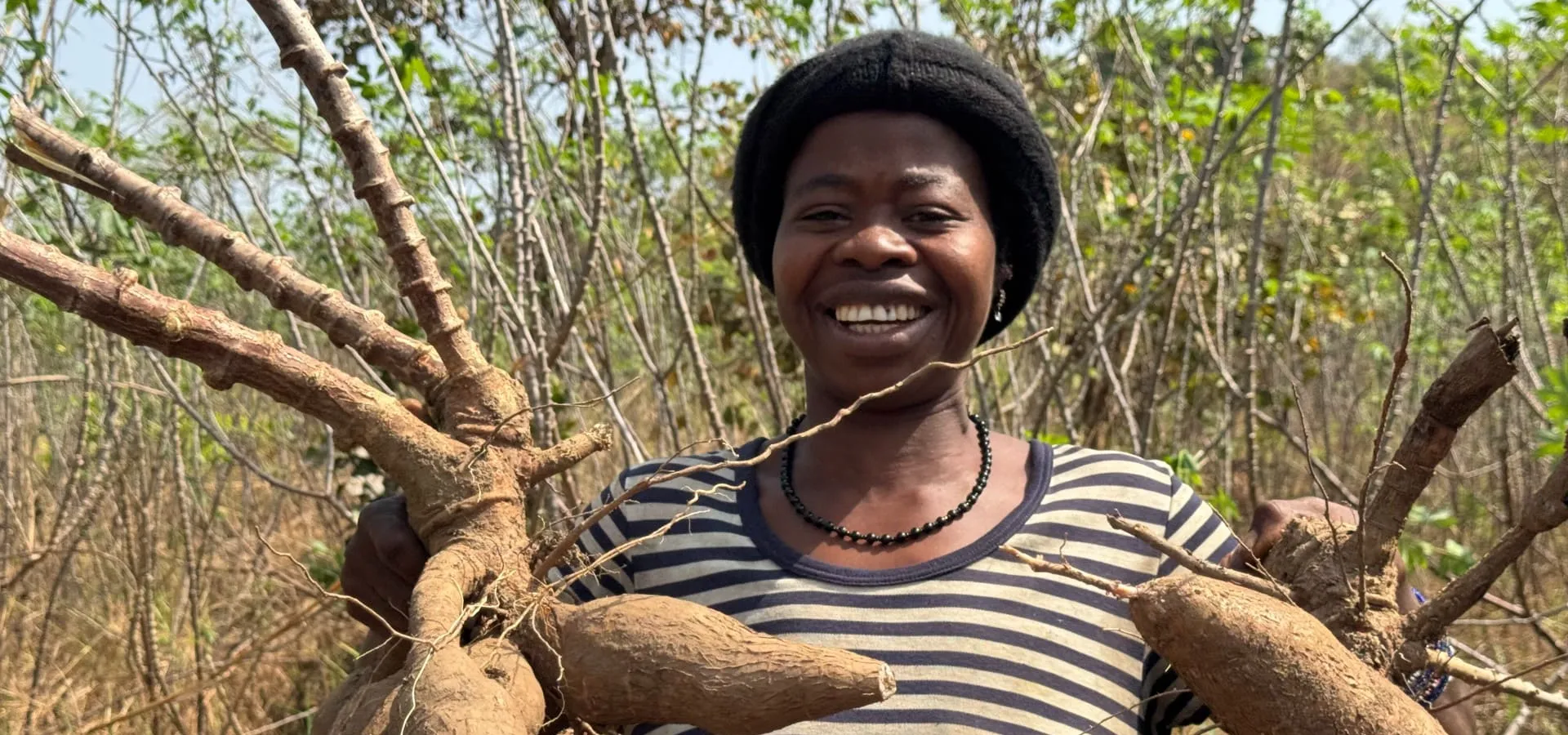
Cassava value chain strengthening for improved food security and sustained income project
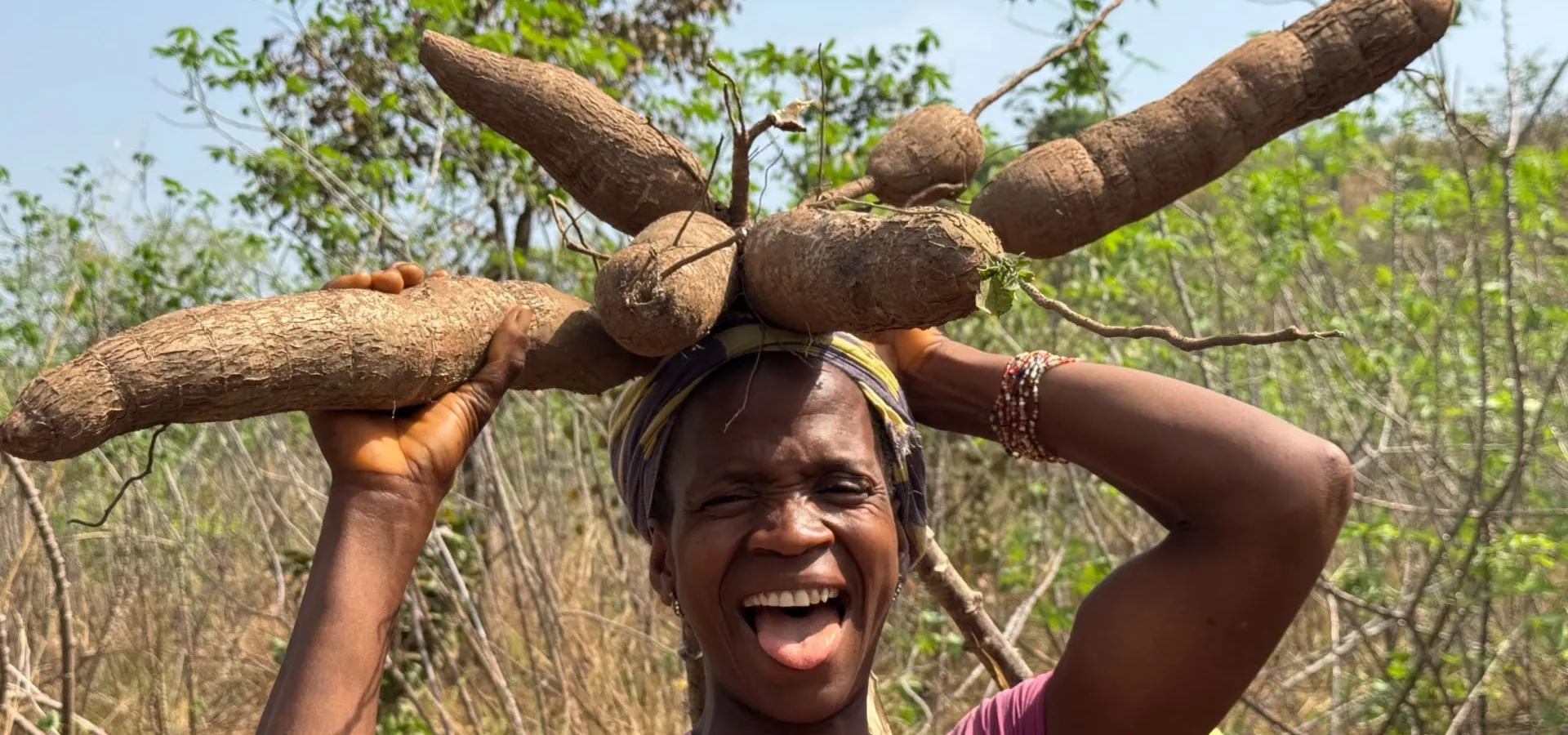
The Cassava Value Chain Strengthening for Improved Food Security and Sustained Income project is a 42-month initiative (May 2024–October 2027) implemented by Daindemben Federation and Munafa-M’Patie Federation across 30 communities in Koinadugu, Falaba, and Bombali districts.
By adopting environment-smart agricultural techniques, farmers are building resilient livelihoods while safeguarding the environment—ensuring a more sustainable and secure future for rural communities in northern Sierra Leone.
To boost agricultural productivity, increase household income, enhance child protection awareness, and promote economic empowerment by strengthening cassava value chain actors. It supports Farmer-Based Organizations (FBOs) integrating cassava cultivation with ruminant livestock rearing using environmentally sustainable practices.



Role: The Ministry of Agriculture plays an important role in carrying out ChildFund Sierra Leone’s Cassava Value Chain Strengthening Project. It provides farming advice, training, and support to help farmers grow, process, and store cassava better. The Ministry also makes sure the project follows national farming and food security plans. It helps farmers get improved cassava varieties, planting materials, and new technologies to increase their harvest and product quality. In addition, the Ministry trains farmer groups on good farming practices and environment-smart methods, connects ChildFund with local authorities, research groups, and businesses, and joins monitoring visits to make sure the project is well implemented and can be expanded successfully.
Learn more at https://maf.gov.sl/

Role: The Sierra Leone Agricultural Research Institute (SLARI) also plays a pivotal role in supporting the project by serving as body for agricultural research, innovation, and knowledge transfer. It provides research-based technical expertise by developing and sharing improved crop varieties, farming techniques, and environment-smart agricultural practices to strengthen the quality of interventions.
SLARI leads in technology development and transfer, generating new agricultural technologies—such as improved seeds, pest-resistant crop varieties, and soil fertility management techniques—and working with ChildFund and its partners to adapt and disseminate these to farmers. It also supports capacity building and training for extension workers, farmer-based organizations, and community groups on best agronomic and post-harvest practices, ensuring that interventions are evidence-based and sustainable.
Learn more at https://slari.gov.sl/

Role: The project has child protection and advocacy components. The Ministry of Gender and Children’s Affairs provided strategic oversight in the implementation of the project in accordance with the strategic focus of the government. They are also responsible for monitoring the project for quality implementation. Facilitating a series of training of community-based child protection structures.
Local Partners: Daindemben & Munafa M’Patie Federations


Role: Support in the overall implementation and monitoring of the project.
- Bombali
- Koinadugu
- Falaba
- School enrollment and attendance increased by 7.5% across Bombali, Falaba, and Koinadugu districts, with over 2,150 children newly enrolled—250 in Bombali (180 boys, 70 girls), 1,200 in Falaba (800 boys, 400 girls), and 700 in Koinadugu (450 boys, 250 girls). This improvement is a direct outcome of a three-day training on child labor, which engaged 300 participants from Farmer-Based Organizations (FBOs).
- According to the project’s baseline study, 52% of children were found to have experienced violence either at home or within their communities. By the end of the first year of the project’s implementation, a notable 18.75% of children (900 out of 4,800) are now experiencing reduced levels of violence in their homes and communities. This positive shift follows a three-day training on positive parenting and child development, which reached 150 participants from Farmer-Based Organizations—50 in each of the three target districts.
- Before the project’s implementation, the average annual household income from cassava production and/or processing stood at Le 12,750. By the end of Year 1, this income had increased by 20%, reaching Le 15,300 among targeted households.
- According to the project’s baseline study, only 22% of households in Koinadugu, 14% in Falaba, and 10% in Bombali had “acceptable” food consumption levels. By the end of the project, these figures had significantly improved—rising by 20 percentage points to 42% in Koinadugu, 34% in Falaba, and 30% in Bombali, as measured by the Food Consumption Score.
Latest News
Contact Us
SHARE VIA: