Victor Kamara

A child being immunized.
Vitamin A supplementation is a life saving investment in children
Every child deserves the chance to grow up healthy, strong, and full of potential. In Sierra Leone, where childhood illnesses continue to pose serious risks to survival and development, a simple yet powerful solution is quietly making a big impact: Vitamin A Supplementation (VAS).
ChildFund, with support from Nutrition International and in close partnership with the Government of Sierra Leone, has been leading a major VAS initiative targeting 500,000 children across all 16 districts. This work is part of the Periodic Intensification of Routine Immunization for Vitamin A Supplementation (PIRVAS) project, a strategy aimed at reaching the most underserved children and boosting national coverage levels.
The first round of PIRVAS, carried out between November and December 2021, focused on 709 low-performing Peripheral Health Units (PHUs). Thanks to the combined efforts of the government and partners, over 237,000 children aged 12–59 months received Vitamin A, while more than 241,000 were treated with albendazole to combat intestinal worms. Among infants aged 6–11 months, over 38,000 received life-saving doses of Vitamin A.
These numbers reflect lives protected and futures made brighter. Following this effort, coverage for children aged 6–11 months jumped to an impressive 148.9%, and national coverage for children aged 12–59 months increased to 65.8%, up from just 45% earlier that year.
Yet, the work didn’t stop there. In June 2022, the second phase of PIRVAS began, this time targeting 862 PHUs identified as low-performing based on new data. Again, nearly 193,000 children aged 12–59 months and over 35,000 infants were reached with vital Vitamin A supplements. These efforts show a consistent commitment to reaching every child, especially those most at risk of being left behind.
What makes Vitamin A so important? It is one of the most cost-effective health interventions available. It helps prevent blindness, strengthens the immune system, and significantly reduces the risk of death from common childhood illnesses like measles and diarrhea. In countries with high levels of vitamin A deficiency, it can lower child mortality by up to 12%, and in some areas, even by 24%.
These are results we cannot ignore.
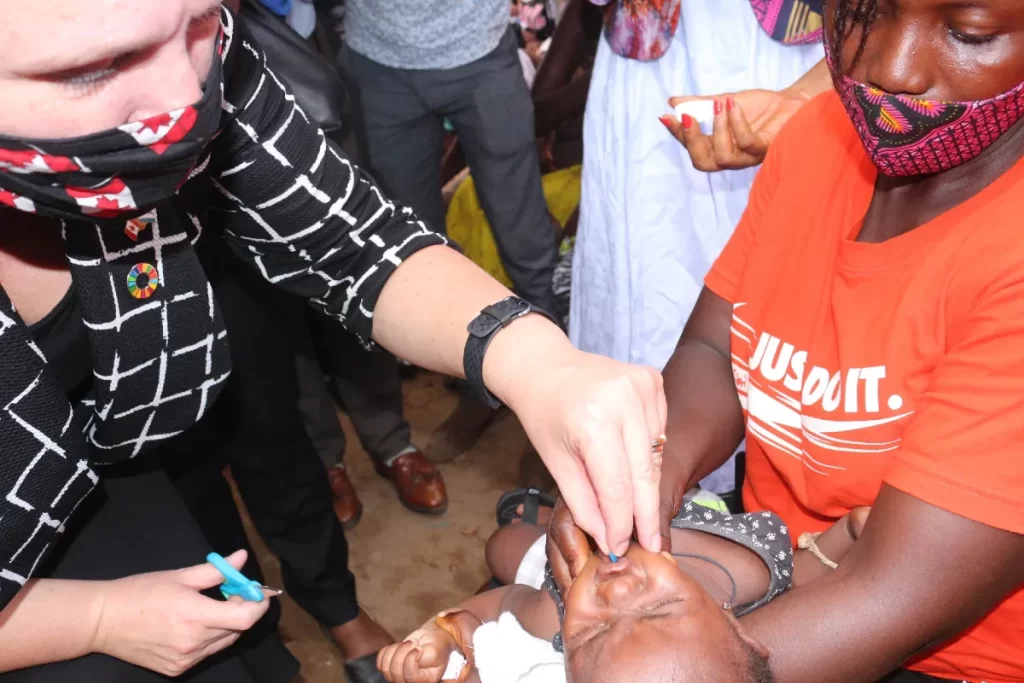
The visit of Canadian High Commissioner Kati Csaba to one of the implementation sites in Hastings underscores the global support behind this important work. Her presence signaled strong international backing and a shared belief in the power of partnership to drive change.
The Ministry of Health, through its Directorate of Food and Nutrition, led the implementation of this USD 142,907 intervention, while ChildFund managed the financial, administrative, and monitoring aspects. This collaboration between government and development partners is a model for how targeted, data-driven interventions can bring about real progress in child health.
Vitamin A Supplementation may seem like a small act, but its impact is anything but small. In Sierra Leone, it is helping to close the gap in child survival and ensure that no child’s life is cut short by a preventable illness.
SHARE: