

“He who feels it, knows it”: Meet Morison, the teenager who’s speaking out on violence against children
June 5, 2025

Morison
“I know what violence is because I have gone through it myself,” says Morison, a seemingly ordinary 16-year-old who is, against all odds, making big changes for children in his community.
“Violence has severe and lasting effects on a child’s physical, social and mental well-being,” Morison says. “That’s why I wanted to become an advocate for my peers whose voices have yet to be heard.”
From survivor to outspoken advocate
As a young child, Morison himself faced bullying from peers and teachers alike in school. When he was 11 years old, a relative persuaded his parents to send him to Freetown – Sierra Leone’s bustling capital – in hopes of a better education. When Morison arrived in the big city, however, the reality of his situation was much different than promised.
“I was faced with hunger, intimidation and more,” Morison says. “But I was inspired by the challenges I faced.
“When I was young, I always wanted to be in the media. I would see other kids in the media, articulating, talking about issues affecting them.”
Motivated by the energy of these outspoken young people – and the urgency of his own experiences with violence – Morison started to join school clubs and participate in community anti-violence training.
“My community is a beautiful place,” Morison says. “We have a rich cultural heritage, and we have this deep aspect of community spirit. We are resilient in facing issues affecting us.
“But sometimes, societal and cultural norms can encourage violence in our community. So can gender inequality and poverty. Some parents do not have the capacity to provide for their children [financially], and they are likely to be vulnerable. This becomes a driver of violence. For example, our parents used to send our sisters to early marriage at age 15 or 16, which is very bad. It affected them mentally and led them to drop out of school.
“This is why awareness raising is so important. I believe that if the community is able to understand what violence means and what the impact of violence is, they can take action to stop it.”
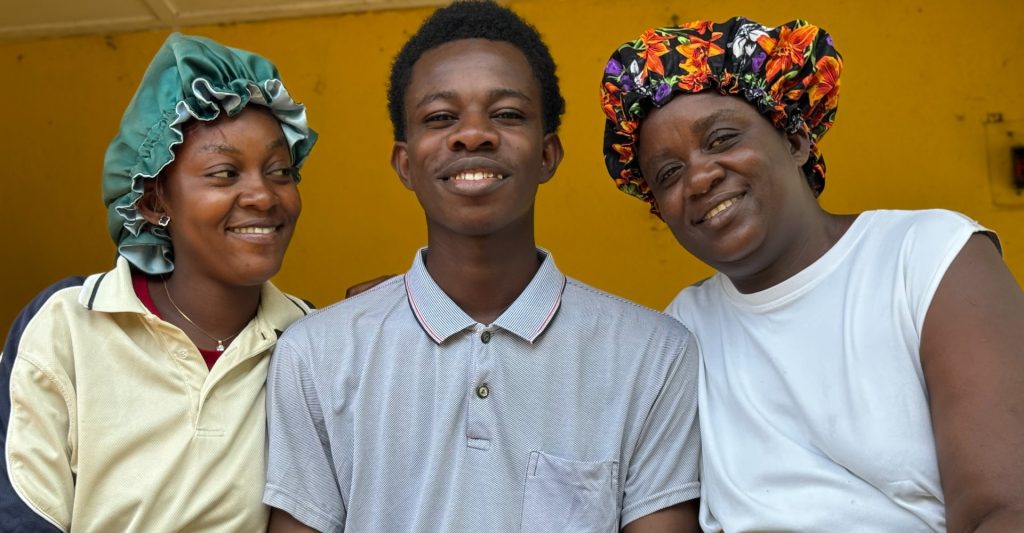
When Morison was invited to join the Children’s Forum Network, a national child-led organization that works with the Sierra Leonean government to protect children, he finally found his voice — and now serves as the network’s vice president.
“From my leadership in the Children’s Forum Network, I have learned valuable lessons – especially from ChildFund, who has been working with the network for the last five years,” Morison says. “I’ve learned to network, collaborate and encourage others to share their opinions. Teamwork has the power to help us achieve our goals.”
Through the network, Morison has had powerful opportunities to raise children’s voices at both community and national levels. Notably, he contributed as a child consultant in drafting policy legislation aimed at ending child marriage. – legislation that passed just this year. He is currently contributing to the review of the draft Child Act of 2024, which seeks to criminalize female genital mutilation (FGM) for anyone under the age of 18.
But Morison emphasizes that strong policies alone are not enough — governments must also be ready to enforce them effectively.
“Though we have beautiful laws, how effectively are these laws addressing violence against children?” Morison says. “I remember in the most recent case we had [of violence against children], a child was raped and killed. And there was no action taken for justice.
“This is not only the case in Sierra Leone, or Africa at large,” Morison says – it’s everywhere, and it comes down to systems change. “We need robust systems for reporting, investigating and addressing child abuse in our countries.”
Morison also stresses the importance of raising awareness about violence against children at the community level, efforts in which child-led organizations like his own Children’s Forum Network can serve as critical partners.
“Many children and youth, and even the leaders or chiefs of their communities, have no idea of the impact of violence on children,” he says. “Part of what we do at the Children’s Forum Network is build community-level teams to help raise awareness about why we need to protect children. The government can help by funding these child-led teams in communities, schools and everywhere young people gather.”
Speaking out to end violence against children
Although Morison didn’t attend the first Ministerial conference on EVAC in Colombia, he was encouraged to know that ChildFund staff were sharing some of the key messages there. In preparation for the event, he had conducted surveys with children in his community to gather and share their perspectives on ending violence against children with global leaders.
His activism is a huge opportunity to make his community proud, especially his family.
“My parents and my family members have been so supportive of me so far,” Morison says. “My dad has been so inspirational; my mom has been so passionate about my education.
“I want to see an Africa free from violence against children. I want to see myself being a leader … eventually, to go outside and learn something and bring it back to Sierra Leone to ensure that we spread the idea of protecting and safeguarding children.”
But Morison is perhaps most excited at the momentum the world is gaining in allowing children a platform to speak.
“There has been such a misconception in our thinking about children’s emotional intelligence and capacity to address complex problems,” Morison says. “We, as children, actually have plentiful, unique ideas and opinions on how to address our own problems.
After all, he adds poignantly, “He who feels it, knows it.”
SHARE:




Related Resources
Play based learning helps children see teachers as friends, not figures to fear
For 12-year-old Mabinty, starting Class 5 at a new school in a larger town was...
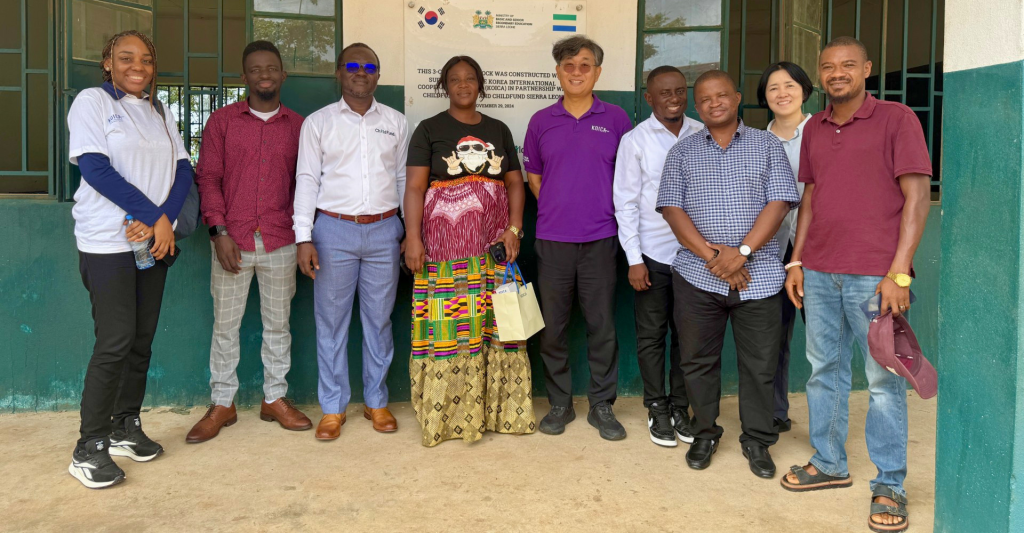
Six months on: ChildFund and KOICA review gains of girls’ education project in Sierra Leone
Six months after the completion of a transformative education initiative, ChildFund and the Korea International...

Meet the farmers uniting against child labor in Koinadugu
Rugiatu, Saran, Kumba, and Adama are cassava farmers and mothers living in Koinadugu District. Like...